
 By
By 
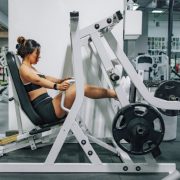
Fitness trends come and go, but the core objective of physical training should always be to make your life outside the gym easier and safer. Traditional gym workouts often focus on isolating individual muscles on specialized machines, such as seated leg extensions or biceps curls. While these exercises have their place in body building, they do little to prepare your body for the complex, multi-planar movements required in daily life. Functional training bridges this gap by training your muscles to work together rather than in isolation. By mimicking the natural movement patterns you perform every day, functional training enhances your strength, balance, and coordination, transforming how you navigate the physical world.
What Is Functional Training and Why Does It Matter
Functional training is a classification of exercise that involves training the body for the activities performed in daily life. Instead of focusing on single muscle hypertrophy, functional routines emphasize integrated movement patterns that engage multiple joints and muscle groups simultaneously.
When you pick up a heavy grocery bag, lift a toddler from the floor, or reach up to place a suitcase in an overhead bin, your body does not rely on just one muscle. It requires a coordinated effort from your core, back, legs, and shoulders. Functional training prepares your nervous system and musculoskeletal structure for these demands. By prioritizing compound movements over isolated lifts, you build a resilient body that resists injury and moves with greater efficiency, grace, and confidence.
The Core Movement Patterns of Everyday Life
To understand how functional training improves your daily life, it helps to examine the fundamental movement patterns that humans perform daily. These patterns form the foundation of almost every functional exercise program.
-
The Squat Pattern: Mirroring the action of sitting down and standing up from a chair, this pattern targets your quadriceps, hamstrings, glutes, and core stabilizers.
-
The Hinge Pattern: Based on bending forward at the hips while keeping a flat back, this pattern is essential for picking objects off the floor without straining your lower back.
-
The Push Pattern: Encompassing both horizontal pushes, like opening a heavy door, and vertical pushes, like lifting an object overhead, this pattern builds upper body strength.
-
The Pull Pattern: Simulating actions like pulling open a stuck drawer or starting a lawnmower, pulling movements strengthen your upper back, lats, and biceps.
-
The Carry Pattern: Carrying groceries, luggage, or children challenges your grip strength, postural endurance, and core stability under load.
-
The Rotation Pattern: Twisting your torso to look behind you or swing an object relies on your oblique muscles and thoracic spine mobility.
Moving Beyond Fixed Machines Into Real-World Strength
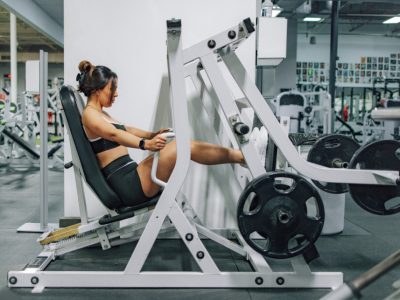
Traditional weightlifting machines guide your body through a fixed, artificial range of motion. While this minimizes the risk of improper form for beginners, it also takes your stabilizing muscles out of the equation. In real life, objects do not move on a fixed track, and the ground beneath you is rarely perfectly stable.
Functional training utilizes free weights, resistance bands, kettlebells, medicine balls, and bodyweight exercises that force your stabilizer muscles to engage. When you perform a dumbbell lunge instead of a seated machine leg press, you are not just working your leg muscles. You are simultaneously training your ankles, knees, hips, and core to maintain balance on an unstable plane. This translates directly to real-world scenarios, such as walking on uneven terrain or catching your balance on a slippery sidewalk, preventing falls and sprains.
Enhancing Core Stability and Posture
A strong core is the absolute centerpiece of functional fitness. Many people mistakenly believe that core strength is synonymous with having visible abdominal definition. In reality, your core is a complex cylinder of muscles including your rectus abdominis, obliques, transverse abdominis, erector spinae, and pelvic floor.
Functional exercises train your core to act as a natural brace, transferring force efficiently between your upper and lower body while protecting your spine. Whether you are sitting at a desk for eight hours or standing on your feet all day, functional core training improves your posture by reinforcing the muscles that keep your spine aligned. This reduction in postural fatigue means fewer aches at the end of the workday and a significantly lower risk of chronic back pain.
Joint Health and Injury Prevention
As people age, maintaining joint mobility and stability becomes critical for preserving independence. Traditional weightlifting can sometimes place excessive shearing stress on isolated joints if performed incorrectly. Functional training, by contrast, prioritizes natural joint articulation and full range of motion.
By strengthening the tendons, ligaments, and stabilizing muscles surrounding major joints like your hips, knees, and shoulders, functional training creates a protective armor around your skeletal system. When your joints are supported by balanced muscular tension, you are far less likely to experience strains, tears, or overuse injuries during routine physical tasks. Furthermore, functional exercises often incorporate balance and proprioception work, which teaches your brain where your body is in space and drastically reduces the risk of accidental falls.
Frequently Asked Questions
Can beginners perform functional training safely without prior gym experience?
Functional training is exceptionally adaptable and suitable for individuals of all fitness levels and ages. Beginners can start with simple bodyweight movements, such as unweighted sit-to-stands from a chair, wall pushes, and step-ups, before progressing to external resistance like dumbbells or kettlebells. The key is mastering the basic movement mechanics before increasing intensity or load.
How many days a week should I incorporate functional training into my routine?
Incorporating functional training two to four days per week provides an optimal balance of stimulus and recovery for most individuals. Because these workouts engage multiple muscle groups and complex movement patterns, they require adequate rest for your nervous system and connective tissues to adapt and grow stronger.
Is cardio required in a functional training program?
Cardiovascular endurance is naturally built into functional training when you perform compound movements with minimal rest between sets. High-intensity multi-joint movements elevate your heart rate quickly, providing cardiovascular benefits alongside strength and stability gains, meaning you do not necessarily need to spend hours on a traditional treadmill.
What equipment do I need to start functional training at home?
You do not need an elaborate home gym to practice functional training effectively. Minimalist equipment such as a resistance band, a kettlebell or a pair of dumbbells, a stability ball, and your own bodyweight are more than enough to execute a comprehensive and challenging functional fitness routine.
How does functional training differ from athletic conditioning?
While athletic conditioning is specifically tailored to enhance performance in a particular sport, functional training focuses on improving general human movement patterns applicable to everyday life. Athletic conditioning often pushes speed, power, and agility to elite extremes, whereas functional training prioritizes longevity, injury prevention, and basic physical competence.
Will functional training help me lose weight and build muscle?
Functional training effectively burns calories and builds lean muscle mass because it relies heavily on compound movements that recruit large muscle groups simultaneously. When combined with a balanced nutritional intake, this full-body engagement boosts your resting metabolic rate, supports fat loss, and sculpts functional, toned muscle.




Comments